

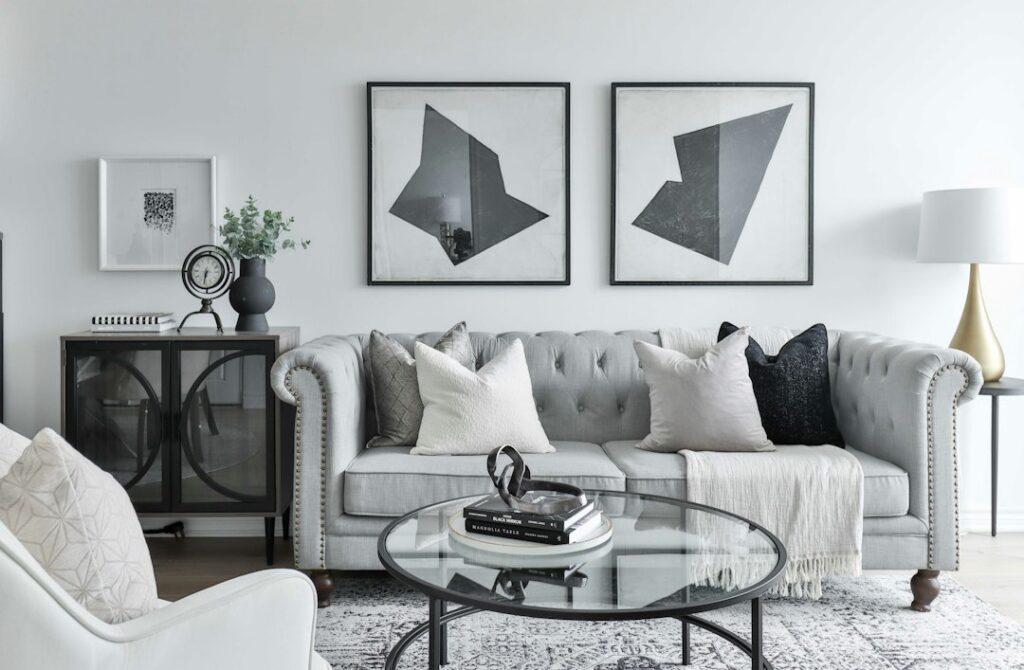
Mixing high-end and affordable décor works best when the room has a clear point of view. A few carefully chosen investment pieces can provide structure, comfort, and visual character, while more modestly priced furnishings fill out the space without making every item feel overly formal or costly.
How can expensive and affordable décor look intentional together?
The key is to connect pieces through color, proportion, material, or shape. Price is not visible in the same way that scale, finish, and condition are visible, so a room can feel cohesive even when its furnishings come from very different price ranges.
For example, a well-made upholstered chair may sit comfortably beside a simpler side table if both share a warm wood tone or complementary fabric colors. A substantial mirror can give a room presence even when the surrounding accessories are inexpensive.
Useful connecting elements include:
- A consistent color palette
- Similar wood or metal undertones
- Repeated shapes, such as rounded lamps and curved seating
- Coordinated textiles
- Balanced proportions between large and small furnishings
A room usually feels more collected when no single item appears completely unrelated to everything around it.
Which furnishings are worth a larger investment?
Investment pieces are usually the items that receive frequent use, define the room, or are difficult to replace. In a living room, that may be the sofa, a primary lounge chair, or a durable area rug. In a dining area, it could be the table and chairs. In a bedroom, the bed frame or mattress may deserve greater attention than decorative accessories.
Prioritize construction and comfort for pieces that must perform every day. Look for:
- Sturdy frames and joints
- Comfortable, supportive seating
- Upholstery suited to household activity
- Finishes that can be maintained over time
- Dimensions appropriate for the room
A higher price does not automatically indicate better quality. Construction, materials, repairability, and comfort are more useful measures than cost alone.
In households where doors remain open during mild weather or where sand and outdoor debris are regularly tracked inside, practical durability matters. Entryway furnishings, upholstery, and rugs should be selected with cleaning and everyday wear in mind rather than treated as purely decorative purchases.
Where can affordable décor add the most value?
Lower-cost pieces are especially useful for items that change with taste, season, or household needs. Accessories, occasional tables, lamps, baskets, artwork, and accent pillows can often be purchased economically without weakening the overall design.
Affordable décor is also helpful when a room needs more texture or layering. A simple console can look more finished with a thoughtfully arranged lamp, framed artwork, and a small collection of books. A basic bedroom can feel more comfortable with layered bedding and curtains in coordinated shades.
The goal is not to hide the price of an affordable piece. Instead, choose items that contribute something specific:
- Function, such as storage or lighting
- Texture, such as woven materials or natural fibers
- Contrast, such as a dark accent against pale walls
- Scale, such as a tall plant or substantial lamp
- Flexibility, allowing the piece to move between rooms
A modestly priced item often looks more considered when it has a clear purpose.
How should a room be divided between high-end and affordable pieces?
There is no required percentage, but many balanced rooms use a few strong anchor pieces surrounded by more accessible furnishings. The anchors establish quality and character; the supporting pieces make the room functional and livable.
A practical approach is to select one or two focal points first. In a sitting room, this might be a sofa and rug. In a dining room, it might be the table and lighting. Once those pieces are chosen, less expensive items can be evaluated according to whether they support the main composition.
Avoid placing all of the expensive pieces together in one corner. A premium sofa, inexpensive coffee table, and carefully selected lamp may feel more natural than a room where every investment item is clustered in a single display.
Distributing stronger pieces throughout the room helps the eye move around the space.
Can different wood finishes and metals be mixed?
Yes, but variation should appear deliberate. Rooms rarely need every wood finish or metal to match exactly. Excessive matching can make furnishings look purchased as a single set rather than assembled over time.
To mix finishes successfully, repeat each important finish at least twice when possible. A warm wood tone might appear in a table and picture frame. A muted metal could be repeated in lighting and hardware. The repeated elements create a relationship even when the pieces are not identical.
Pay attention to undertones. Yellow-toned woods, reddish woods, gray woods, and painted finishes can compete when placed together without a unifying color or texture. A rug, wall color, or fabric pattern can help bridge those differences.
How can textiles make a mixed-budget room feel more polished?
Textiles often have a greater visual effect than their price suggests. Curtains, pillows, throws, and rugs introduce softness, pattern, and color across a large area, making them useful for connecting furniture from different sources.
Choose textiles by considering:
- Fabric weight and drape
- Pattern scale
- Color temperature
- Durability and cleaning needs
- Relationship to natural light

Homes in this region may experience bright sun, seasonal humidity, and frequent transitions between indoor and outdoor living. Fabrics should therefore be judged not only by appearance but also by fading, maintenance, and how comfortably they perform through the year.
A room with simple furniture can feel elevated through well-proportioned curtains, a substantial rug, and pillows in varied textures. Conversely, expensive furniture can appear unfinished if textiles are too small, too thin, or unrelated in color.
What common mistakes make mixed décor look disconnected?
The most common problem is not mixing price levels; it is mixing styles without a visual bridge. A traditional wood table, sleek metal chair, and rustic accessories can coexist, but they need shared colors, proportions, or materials.
Other frequent mistakes include:
- Choosing rugs that are too small for the seating arrangement
- Using too many small accessories instead of a few varied-scale objects
- Ignoring lighting temperature and relying on one overhead fixture
- Selecting furniture that is too large for the room
- Buying inexpensive pieces that are difficult to clean or repair
- Treating every surface as a place that must be filled
Clutter can make both luxury and affordable furnishings appear less distinctive. Leave some open space so that the most meaningful pieces can be noticed.
How can residents create a refined look without overspending?
Start with measurements, a basic floor plan, and a short list of priorities. Purchasing slowly is often more effective than filling a room quickly with items that later need to be replaced.
Before buying, ask:
- Does this piece solve a real problem?
- Is the scale appropriate?
- Can it work with existing furnishings?
- Will the finish hold up to daily use?
- Is it attractive from more than one angle?
- Can it move to another room if needs change?
For a home that hosts family gatherings, welcomes pets, or includes frequent indoor-outdoor movement, comfort and maintenance should guide the budget. For a quieter household, visual detail and craftsmanship may deserve greater emphasis.
A refined room does not require every object to be expensive. It requires clear priorities, useful proportions, compatible materials, and enough restraint to let the strongest pieces carry the design.