

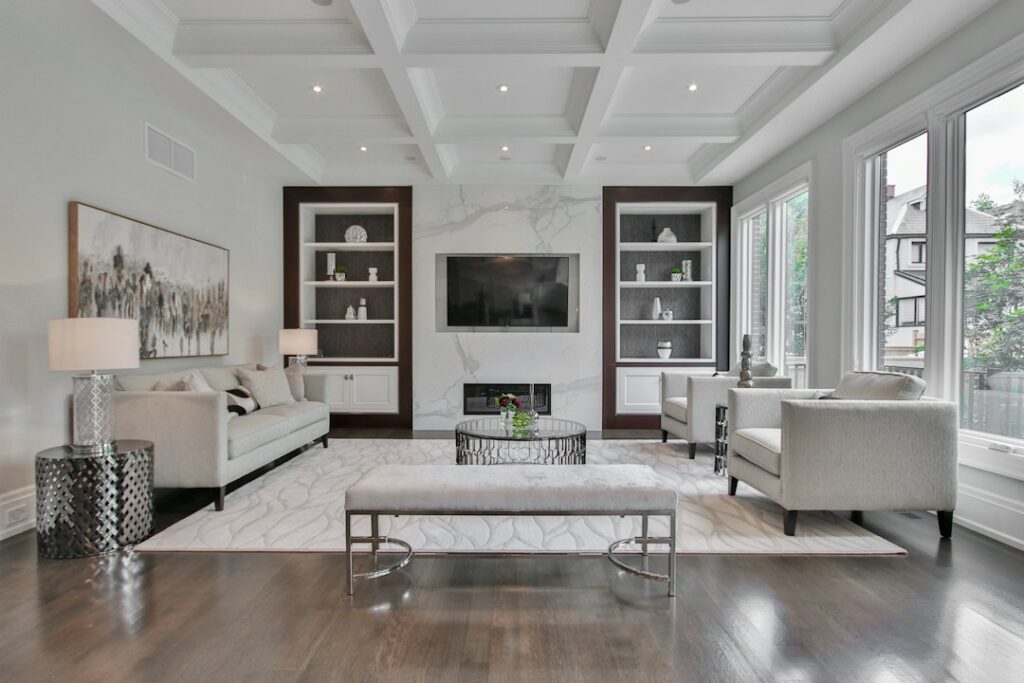
Luxury home décor is not defined by a single style, price point, or historical period. In Southern Pines, NC, homeowners may find that both modern and traditional interiors can feel refined, comfortable, and highly personal. The main difference lies in how each style uses space, materials, color, furniture, and decorative detail.
Understanding those differences makes it easier to evaluate a room based on how it looks, feels, and functions rather than relying on labels alone.
What defines modern luxury décor?
Modern luxury décor emphasizes simplicity, proportion, quality materials, and visual calm. Rooms often have fewer decorative objects, cleaner furniture profiles, and a more open arrangement.
Modern does not necessarily mean stark, cold, or minimal. A well-designed modern room can feel warm through natural wood, textured fabrics, soft lighting, stone surfaces, and carefully chosen artwork.
Common characteristics include:
- Straight or gently curved furniture lines
- Open floor plans and uncluttered surfaces
- Neutral colors such as ivory, taupe, charcoal, sand, and warm gray
- Smooth materials, including glass, metal, polished stone, and finished wood
- Large-scale artwork rather than many small accessories
- Lighting that serves as both a functional and architectural element
- Strong attention to spacing and visual balance
Luxury in a modern room often comes from restraint. A single substantial table, a well-made sofa, or a carefully selected light fixture may have more impact than a room filled with ornament.
What defines traditional luxury décor?
Traditional luxury décor draws from established furniture forms, layered textiles, detailed woodwork, and a sense of continuity. It may reference historical design without reproducing a period room exactly.
Traditional interiors commonly include upholstered seating with shaped arms, wood furniture, patterned rugs, drapery, decorative lamps, framed artwork, and accessories with visible craftsmanship. The overall effect tends to be layered, collected, and comfortable.
Typical characteristics include:
- Furniture with turned legs, carved details, or curved profiles
- Richer color combinations, including navy, burgundy, forest green, ochre, cream, and brown
- Patterned fabrics such as florals, stripes, checks, damasks, or botanical prints
- Wood finishes ranging from medium walnut to painted or distressed surfaces
- Decorative molding, paneling, trim, or architectural detailing
- Multiple sources of light, including lamps, sconces, and chandeliers
- Accessories arranged to create visual depth and personal history
Traditional luxury does not require every piece to match. In fact, rooms often appear more natural when furniture and objects are coordinated by scale, color, or material rather than purchased as a complete set.
How do modern and traditional styles differ in furniture?
Furniture is one of the clearest ways to distinguish the two approaches. Modern furnishings generally prioritize a simplified silhouette, while traditional furnishings often display more visible construction details.
A modern sofa might have a low profile, broad cushions, and exposed metal or wood legs. A traditional sofa may feature rolled arms, a higher back, tailored upholstery, or decorative trim. Neither form is automatically more luxurious. Quality depends on construction, comfort, fabric durability, and proportion.
For area households, scale is especially important in rooms with high ceilings, large windows, or open connections between living and dining areas. Oversized modern furniture can make a spacious room feel grounded, while substantial traditional pieces can prevent a large interior from feeling empty.
In smaller rooms, too much detailing or overly heavy furniture may reduce flexibility. A simpler modern piece, or a traditional piece with a lighter frame, can preserve circulation and make the room easier to use.
Which style uses color and pattern differently?
Modern décor usually treats color as a controlled element. A neutral background may be combined with one or two stronger accents, such as a deep green chair, a dark stone surface, or a piece of expressive art.
Traditional décor is more comfortable with layering. Several patterns may appear in the same room, provided they vary in scale and share related colors. For example, a large floral pattern might be paired with a narrow stripe and a small geometric motif.
The difference is not simply “plain versus patterned.” Modern rooms can include bold patterns, and traditional rooms can be quiet and neutral. The distinction is usually whether pattern is used as a focused statement or as part of a broader decorative composition.
How do materials affect the feeling of luxury?
Materials communicate quality through texture, weight, finish, and durability. Modern interiors often highlight the natural character of a material. Veined stone, figured wood, ribbed glass, brushed metal, and textured plaster may be allowed to stand out without much ornament around them.

Traditional interiors often combine materials in more layered ways. Wood may be paired with woven textiles, patterned upholstery, polished brass, ceramic objects, and framed artwork.
The local climate and seasonal habits also matter. Warm-weather conditions can make breathable upholstery, washable textiles, natural fibers, and well-placed window treatments practical considerations. Materials should be selected not only for appearance but also for how they handle sunlight, dust, humidity, pets, and everyday use.
Which approach works better in open-plan homes?
Modern décor often adapts naturally to open-plan layouts because its clean lines and limited visual clutter help connect multiple functions. However, a completely uniform modern scheme can make a large space feel impersonal.
Traditional décor can add warmth and definition to an open plan, but too many patterns, furniture groupings, or dark finishes may make the area feel visually crowded.
A balanced approach is to create separate zones through rugs, lighting, furniture orientation, and changes in texture. The dining area does not need to look identical to the living area, but both should share a few elements such as wood tone, accent color, or metal finish.
Can modern and traditional luxury styles be combined?
Yes. Combining the two is often called transitional design, although a room does not need a formal label. The goal is to balance clean forms with warmth, detail, and familiar materials.
Examples include:
- A streamlined sofa paired with a carved wood coffee table
- Traditional artwork displayed above a simple console
- Modern dining chairs used with a classic wood table
- A patterned rug beneath furniture with contemporary silhouettes
- Simple window treatments in a room with decorative molding
- Brass or bronze lighting used with neutral modern furnishings
Successful combinations depend on proportion. A heavily ornate piece may overwhelm a minimalist room, while one overly plain item may look disconnected in a highly traditional setting. Repeating a material or color helps the styles feel intentional rather than accidental.
How should homeowners choose between modern and traditional décor?
Start with daily habits instead of style names. Consider how the room is used, how much maintenance is realistic, and whether the household prefers visual simplicity or decorative layering.
Modern décor may suit residents who appreciate open surfaces, fewer objects, and a quieter visual environment. Traditional décor may be more comfortable for those who enjoy books, collected artwork, family furniture, patterned textiles, and rooms that reveal detail gradually.
It is also useful to assess the architecture of the home. Strong trim, divided-light windows, fireplaces, and established woodwork may support traditional or transitional furnishings. Broad windows, simple wall planes, and open layouts may accommodate modern pieces easily. These are guidelines rather than rules; contrast can be effective when it is carefully planned.
What is the most common misconception about luxury décor?
The most common misconception is that luxury depends primarily on expensive objects. In practice, a luxurious room usually reflects thoughtful scale, comfortable seating, durable materials, appropriate lighting, and a clear relationship between the furnishings and the architecture.
Modern and traditional rooms can both feel unsuccessful if they are overcrowded, poorly proportioned, uncomfortable, or difficult to maintain. Conversely, a room with modest decoration can feel sophisticated when the layout is balanced and the materials are selected with care.
For Southern Pines households, the most useful choice is the style that supports the home’s architecture, climate, routines, and long-term preferences. Modern simplicity, traditional richness, or a carefully measured combination can all create a polished interior when comfort and coherence guide the decisions.