

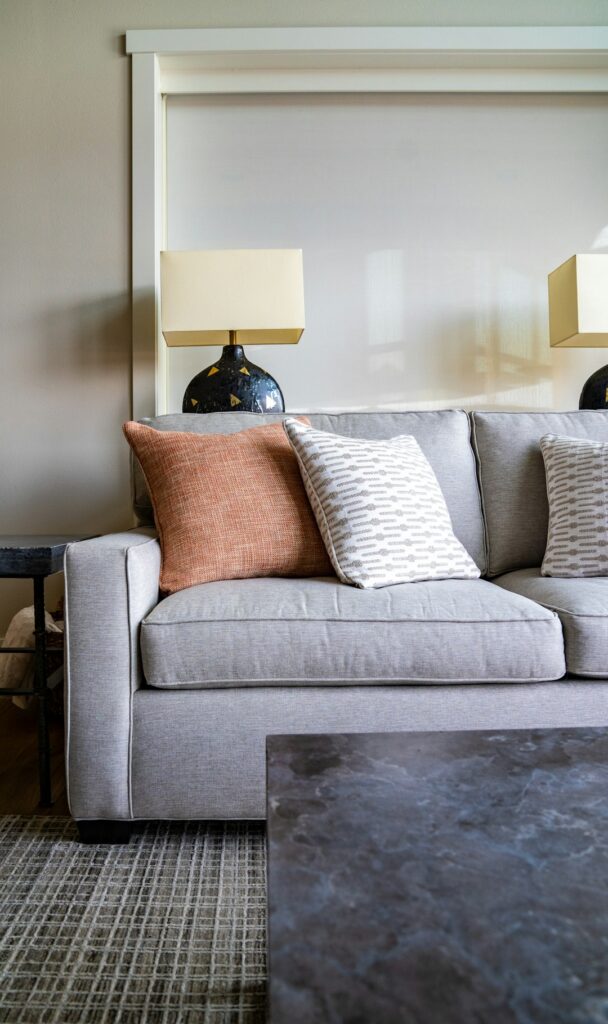
Choosing a sofa involves more than selecting a color or style. The right piece must fit the room, suit the household’s daily habits, remain comfortable over time, and work with the home’s architecture. In Southern Pines, NC, practical considerations such as open floor plans, seasonal humidity, pets, visitors, and indoor-outdoor living can all influence the decision.
What should be measured before buying a sofa?
Measure the room, the intended sofa location, and the entire path the sofa will take from the entry door to the living room. A sofa that fits the wall may still be impossible to deliver through a doorway, hallway, stairwell, or tight turn.
Record these dimensions:
- Wall length and ceiling height
- Doorway and hallway widths
- Stairwell clearance, if applicable
- Distance from the sofa to the television or focal point
- Space needed for coffee tables, side tables, and walkways
- Location of windows, vents, outlets, and doors
Leave roughly 30 to 36 inches for primary walkways when the room allows. In a smaller living room, the layout may require less clearance, but pathways should still feel natural rather than compressed.
Pay attention to sofa depth as well as width. A deep sofa may be comfortable for reclining but can overwhelm a narrow room. A shallower design may provide better support for upright sitting and preserve circulation.
How do room proportions affect sofa size?
The sofa should relate to the room rather than occupy every available inch. In a large living room, a compact sofa can appear visually lost, while an oversized sectional may make a smaller space difficult to navigate.
A useful approach is to think in terms of visual balance:
- Long rooms often benefit from a sofa paired with two chairs rather than a single oversized sectional.
- Open-concept rooms may use a sofa to define the living area without blocking movement.
- Rooms with low ceilings usually look better with a lower-profile sofa.
- Large windows and architectural features should remain visible instead of being crowded by tall furniture.
- A sofa placed against a wall does not always need to touch it; a small gap can create a lighter, more finished arrangement.
Before purchasing, mark the proposed dimensions on the floor with painter’s tape or arrange cardboard boxes to approximate the footprint. This reveals whether the piece leaves enough room for tables, rugs, lamps, and movement.
Which sofa shape works best for everyday living?
The best shape depends on how the room is used. A standard sofa is versatile and works well with additional chairs. A sectional can provide generous seating but requires more careful planning because its orientation and footprint are less flexible.
Consider these common arrangements:
Standard sofa: A practical choice for rooms that need flexibility or may be rearranged later.
Apartment-size sofa: Useful for compact rooms, guest areas, or homes where preserving open floor space is a priority.
Sectional: Appropriate when several people regularly sit together, but the chaise or corner should not obstruct a doorway or primary walkway.
Sofa with chaise: Offers a place to stretch out without the larger footprint of a full sectional.
Curved sofa: Can soften a large room and encourage conversation, though it may be harder to place against a wall and more difficult to pair with rectangular tables.
The sofa’s arm style also affects usable seating space. Wide rolled arms may create a traditional appearance but reduce the interior seat width. Narrow arms provide more seating within the same overall footprint.
How can comfort be evaluated in a showroom or at home?
Comfort is personal, so a sofa should be tested in the same way it will be used. Sit in the center and corner seats for several minutes. Check whether the feet rest comfortably on the floor, whether the knees are supported, and whether the back maintains a relaxed posture.
Consider:
- Seat height, especially for people who prefer easier standing
- Seat depth, based on whether household members sit upright or lounge
- Cushion firmness and how quickly it recovers after use
- Back height and lumbar support
- Arm height for reading, resting, or reclining
- Whether the chaise supports the full leg without forcing an awkward position
A very soft sofa may feel appealing at first but can become less supportive with frequent use. A firm sofa may provide better posture and durability but feel less relaxed. The most suitable cushion is usually the one that supports the household’s actual sitting habits rather than the one that feels most dramatic for a few minutes.
Which upholstery is practical for Southern Pines households?
Fabric selection should reflect sunlight, humidity, pets, children, and how often the sofa will be used. Homes in the area may experience warm, humid periods and strong seasonal sunlight, so upholstery should be evaluated for color stability and ease of maintenance.
Performance characteristics to investigate include:

- Resistance to abrasion from regular sitting
- Ease of cleaning food and drink spills
- Colorfastness near windows
- Texture that will not trap excessive dust or pet hair
- Whether cushion covers can be removed for cleaning
- Availability of replacement or reupholstery options
Leather can be durable and easy to wipe clean, but it may feel warmer in summer and show scratches or changes in finish. Tightly woven fabric can offer a softer feel and broader color choices. Delicate textiles may be appropriate in formal rooms but require more careful use.
A common misconception is that dark upholstery always hides wear better. Dark surfaces may conceal some marks, but they can also show dust, pet hair, and fading. Mid-tone colors and subtle patterns often provide a practical balance.
What frame and cushion details indicate quality?
A sofa’s interior construction affects how it performs after years of use. A strong frame should feel stable, with no excessive movement or creaking when weight shifts. Joints, corner blocks, suspension, and cushion filling all contribute to longevity.
Ask about:
- Frame materials and joinery
- Type of seat suspension
- Cushion core and wrapping materials
- Whether cushions can be rotated or reversed
- How upholstery is attached and repaired
- Care instructions for the specific fabric or finish
Loose back cushions are easy to rearrange and often provide a relaxed appearance. Attached backs stay neater but may be more difficult to repair or replace. Loose seat cushions can be turned and aired out, while one-piece bench cushions offer a clean look but may show uneven wear if people consistently sit in the same location.
Quality does not always mean the firmest or heaviest sofa. Construction should match the expected use, maintenance routine, and room setting.
Should the sofa match existing furniture?
A sofa does not need to be part of a matching furniture set. Coordinated differences usually create a more natural and adaptable room. The key is to repeat at least one visual element, such as color temperature, wood tone, leg finish, scale, or design period.
For example, a tailored sofa can work with traditional tables if the proportions are compatible. A simpler sofa can also balance ornate lighting, patterned rugs, or inherited furnishings. Matching every piece too closely can make a room feel uniform, while unrelated sizes and finishes may look accidental.
Use a fabric sample or photograph of the room to compare upholstery in daylight and evening light. Wall color, flooring, window exposure, and nearby textiles can significantly change how a sofa appears.
What should be considered for seasonal guests and entertaining?
Living rooms that accommodate visitors need flexible seating and clear circulation. A sofa should provide comfortable everyday seating without preventing guests from moving through the room. In homes used for seasonal gatherings, consider whether additional chairs, ottomans, or movable tables can be added when needed.
An ottoman can provide extra seating and leg support, but it should not block the main route through the room. Accent chairs are often more flexible than a second sofa and can be angled toward the primary seating area for conversation.
The final choice should balance comfort, scale, care requirements, and long-term usefulness. A sofa that looks appropriate in a photograph may not be the right fit once measurements, posture, maintenance, and everyday movement are considered.